These are some of the key elements that make his work so unique:
1. Mastery of light
Painting: The Lacemaker (The Louvre, Paris)
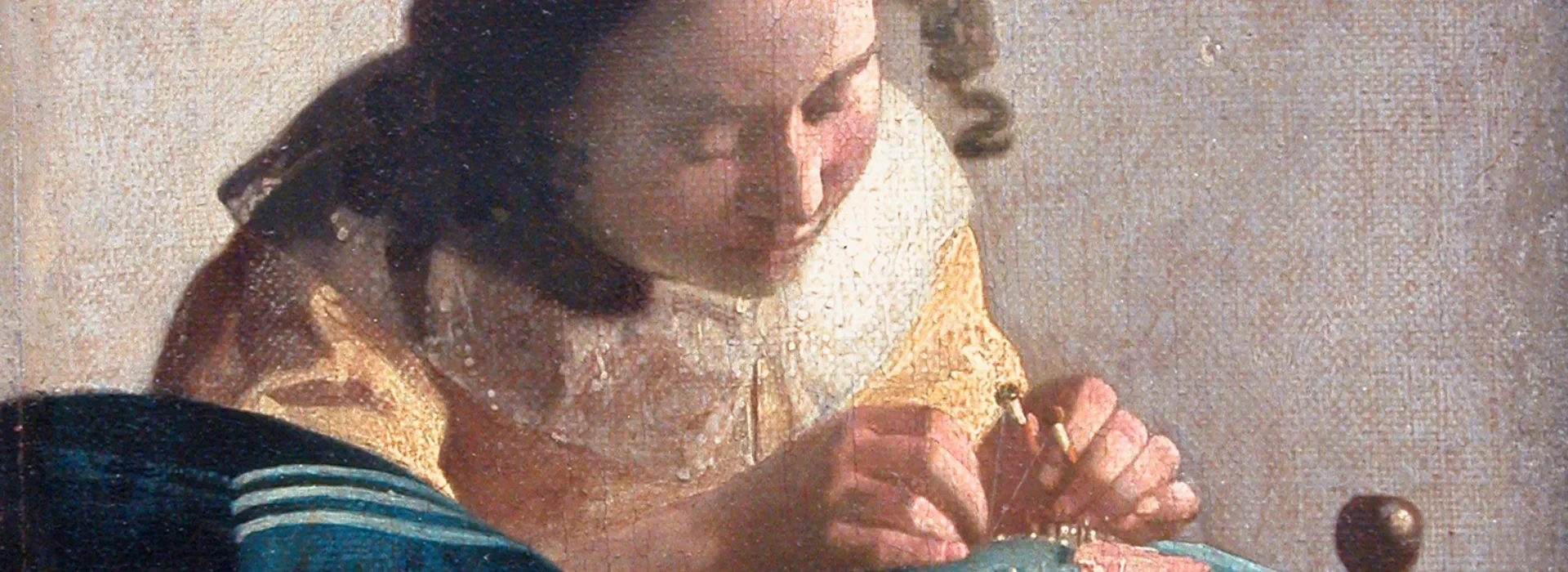
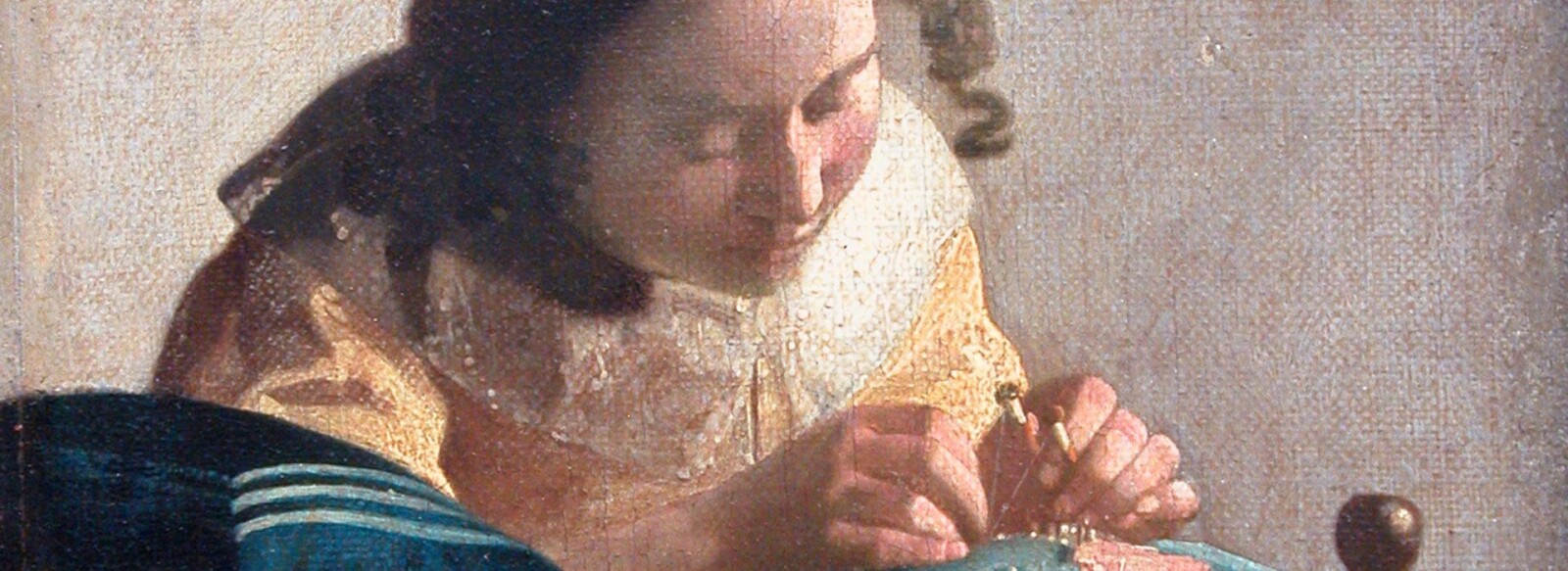
Although this is one of his smallest canvases, here you can see the essence of his treatment of light. Look at the red and white threads emerging from the cushion; Vermeer painted them as fluid ‘blobs’ of light. He does not attempt to depict each thread individually, but paints the visual experience of how light reflects off those threads.
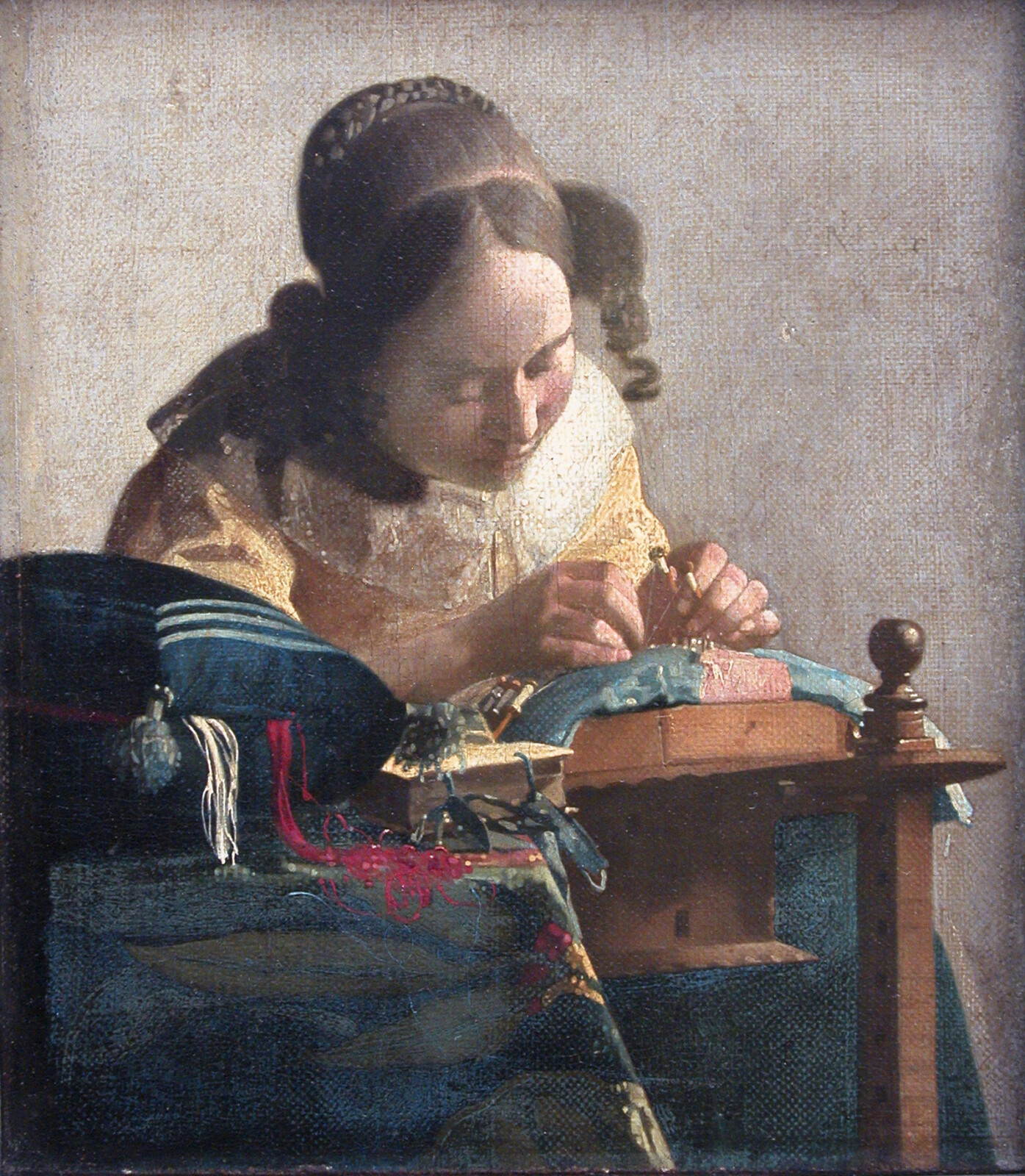
The Lacemaker, Louvre, Paris (image: Wikipedia)
2. Psychological stillness
Painting: Woman with a Balance (National Gallery of Art, Washington)
This is the ultimate example of his stillness. The woman stands there with a balance in perfect equilibrium. There is an enormous tension in the stillness; she is waiting for the scales to stop wobbling. This moment of absolute inner concentration compels the viewer to hold their own breath as well.
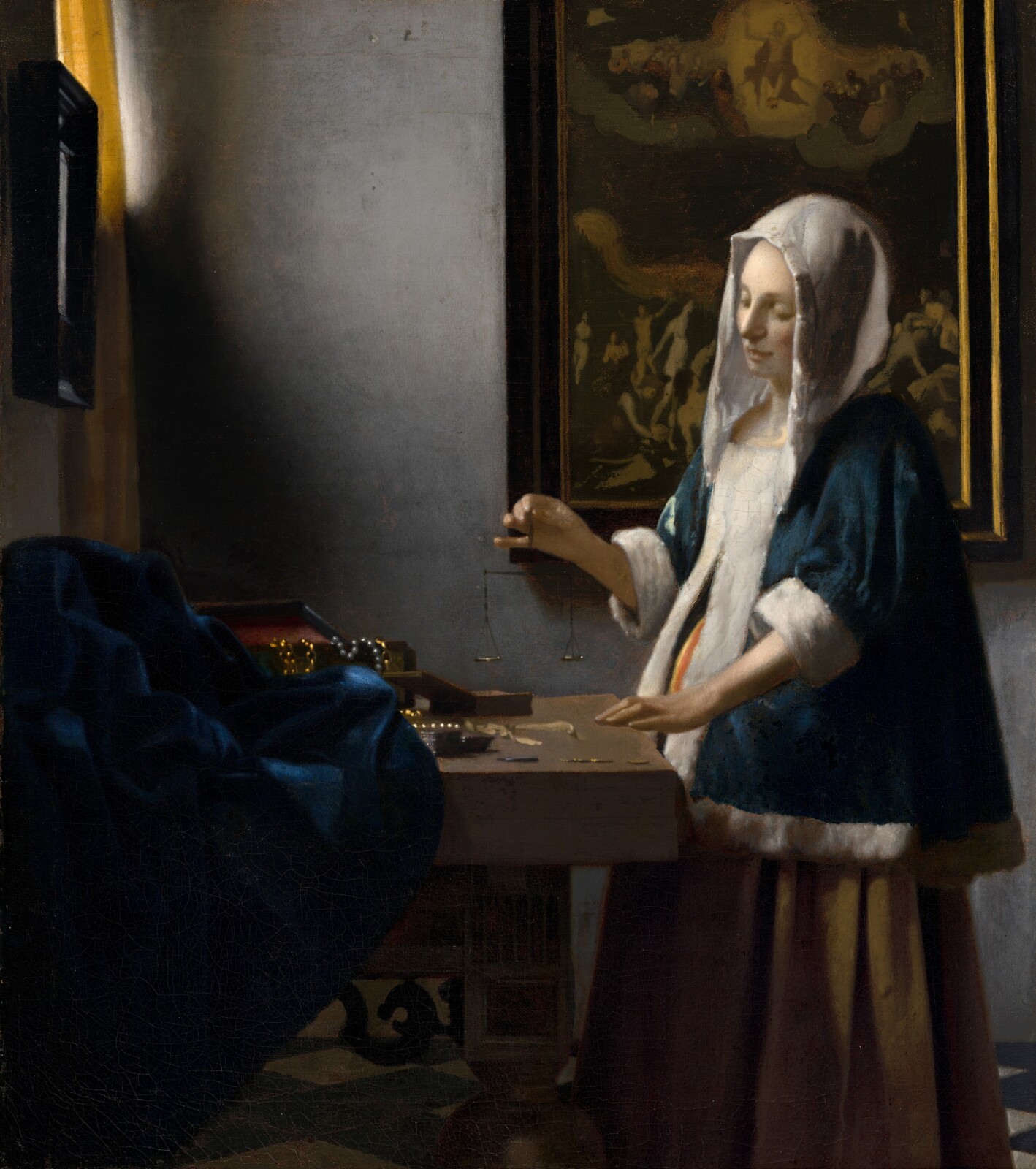
Woman with a Balance, National Gallery of Art, Washington (image: Wikipedia)
3. Optical precision and composition
Painting: The Music Lesson (Royal Collection, Windsor Castle)
This work is a technical masterpiece in terms of perspective and optics. You can see the camera obscura influence very clearly in the way the texture of the carpet in the foreground appears almost ‘out of focus’, whilst the background is razor-sharp. The mirror above the virginal, in which you can see the painter’s feet and his easel, also testifies to his fascination with reflection and depth.
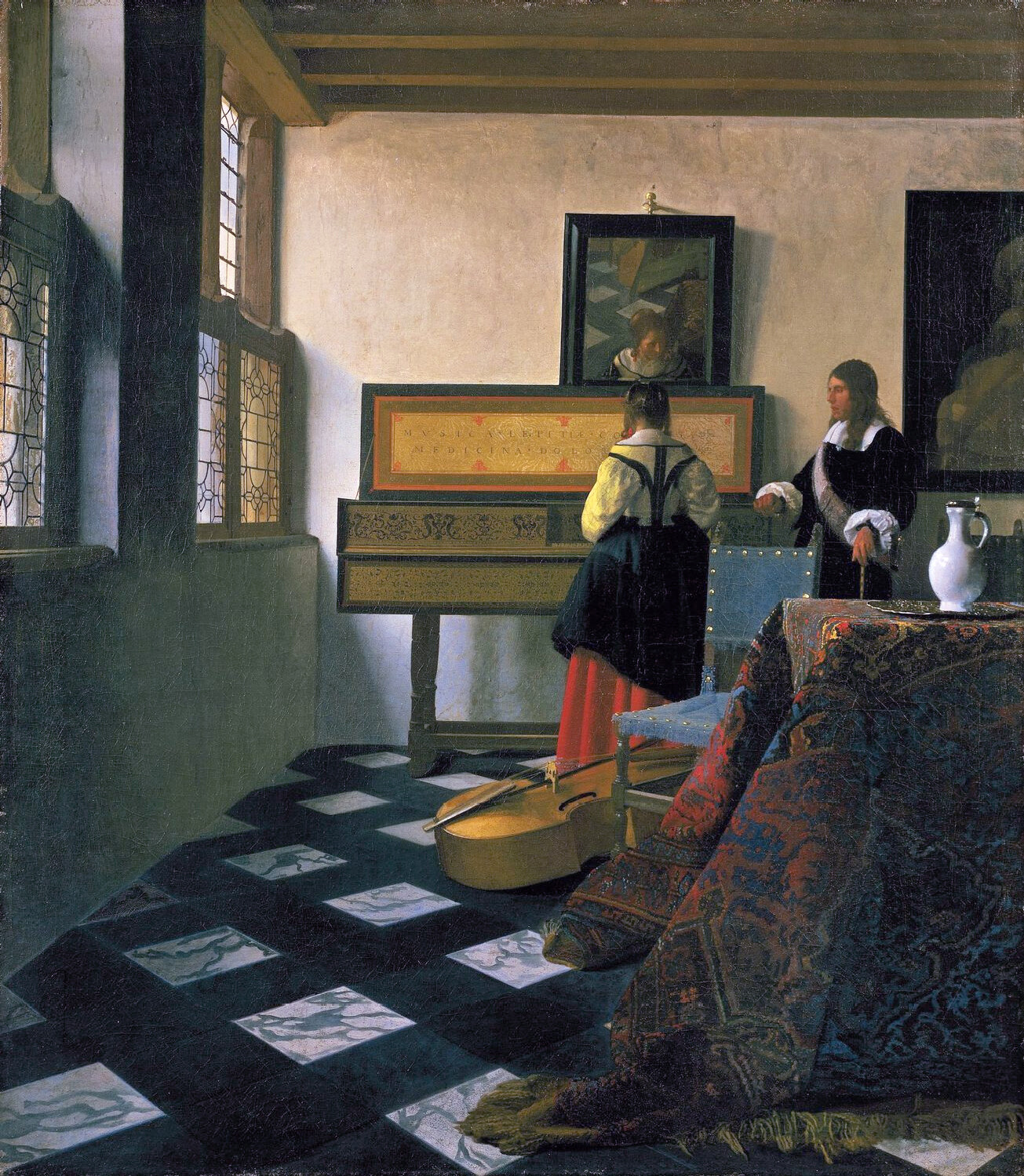
The Music Lesson, Royal Collection, Windsor Castle (image: Wikipedia)
4. Precious pigments (ultramarine)
Painting: Woman Reading a Letter (Rijksmuseum, Amsterdam)
When thinking of his famous works, one often thinks of the yellow jacket, but in this painting, blue reigns supreme. Here, Vermeer used unprecedented quantities of natural ultramarine, not only for the woman’s jacket, but he also mixed it into the whitewash of the wall and the shadows. This gives the light in the room a cool, almost heavenly glow that is found nowhere else in 17th-century painting.

Woman Reading a Letter, Rijksmuseum, Amsterdam (image: Rijksmuseum)
Of course, nothing beats seeing a real Vermeer, but nowhere else can you get as close to the painter himself as in his own city. We are proud to be the only place in the world to display all of Vermeer’s works under one roof. Thanks to our high-quality, life-size reproductions, you’ll get a wonderful impression of his life’s work. Come and visit the Vermeer Centrum Delft and discover the full story behind the man who knew how to capture the light.
Plan your visit to the Vermeer Centrum Delft via this link.