The tangible world: more than just paint
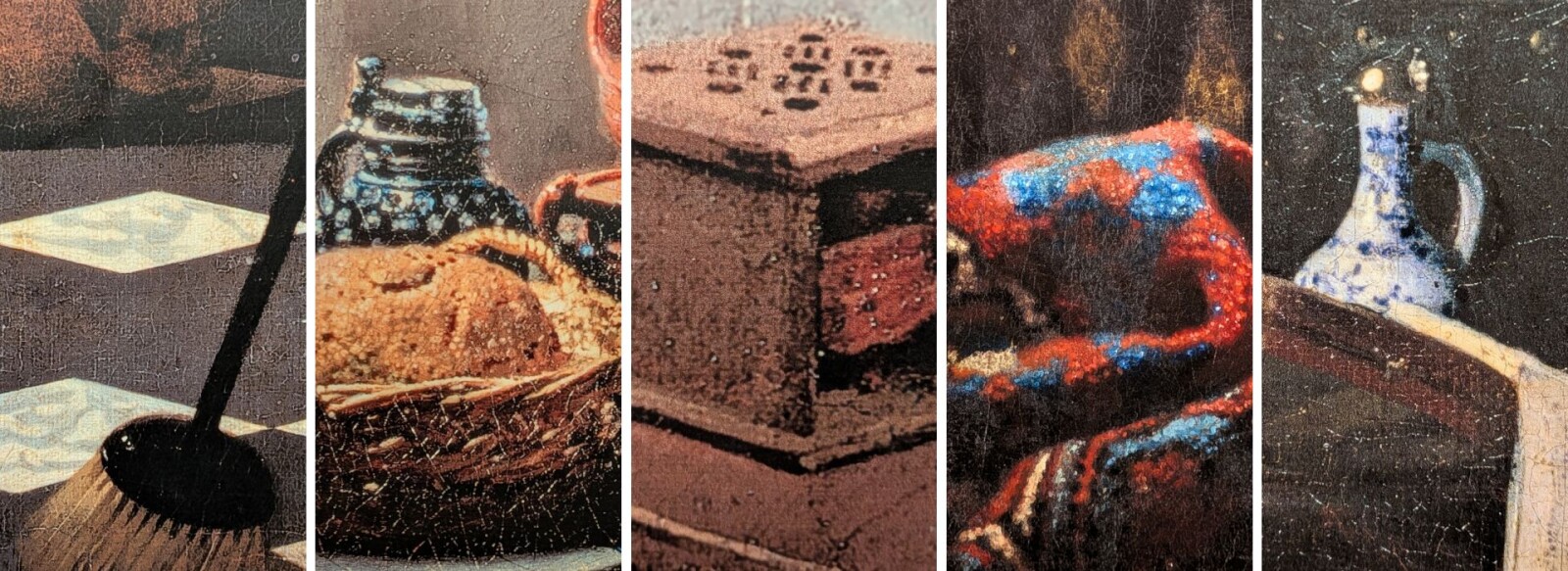
Art-historical literature often seeks the symbolism behind Vermeer’s work, but Alexandra van Dongen takes a different approach in her groundbreaking book *The Tangible World of Johannes Vermeer*. She approaches the paintings from the perspective of material reality. Van Dongen demonstrates that Vermeer did not simply paint ‘anything’, but that the objects in his studio were often genuine, identifiable luxury goods of the time, such as the Indo-Portuguese jewellery box made of teak and ebony, crafted in Cochin (Kochi), India. Alongside luxury goods, Vermeer’s works also feature everyday household objects, made locally or regionally, such as brooms, wicker bread and laundry baskets, or pottery such as the cooking pot on the kitchen table in ‘The Milkmaid’.
By analysing these props as if they were archaeological finds, we can truly grasp the wealth of the households Vermeer portrayed. For Vermeer, a painting is not merely a window into a soul, but also an inventory of the global trade that made Delft wealthy in the 17th century.
The language of the objects
Vermeer regularly reused his props, suggesting that many of these objects were actually in his possession or belonged to the household effects of his mother-in-law, Maria Thins, or to those of his patron and client, Maria de Knuijt. Let us look at a few key categories:
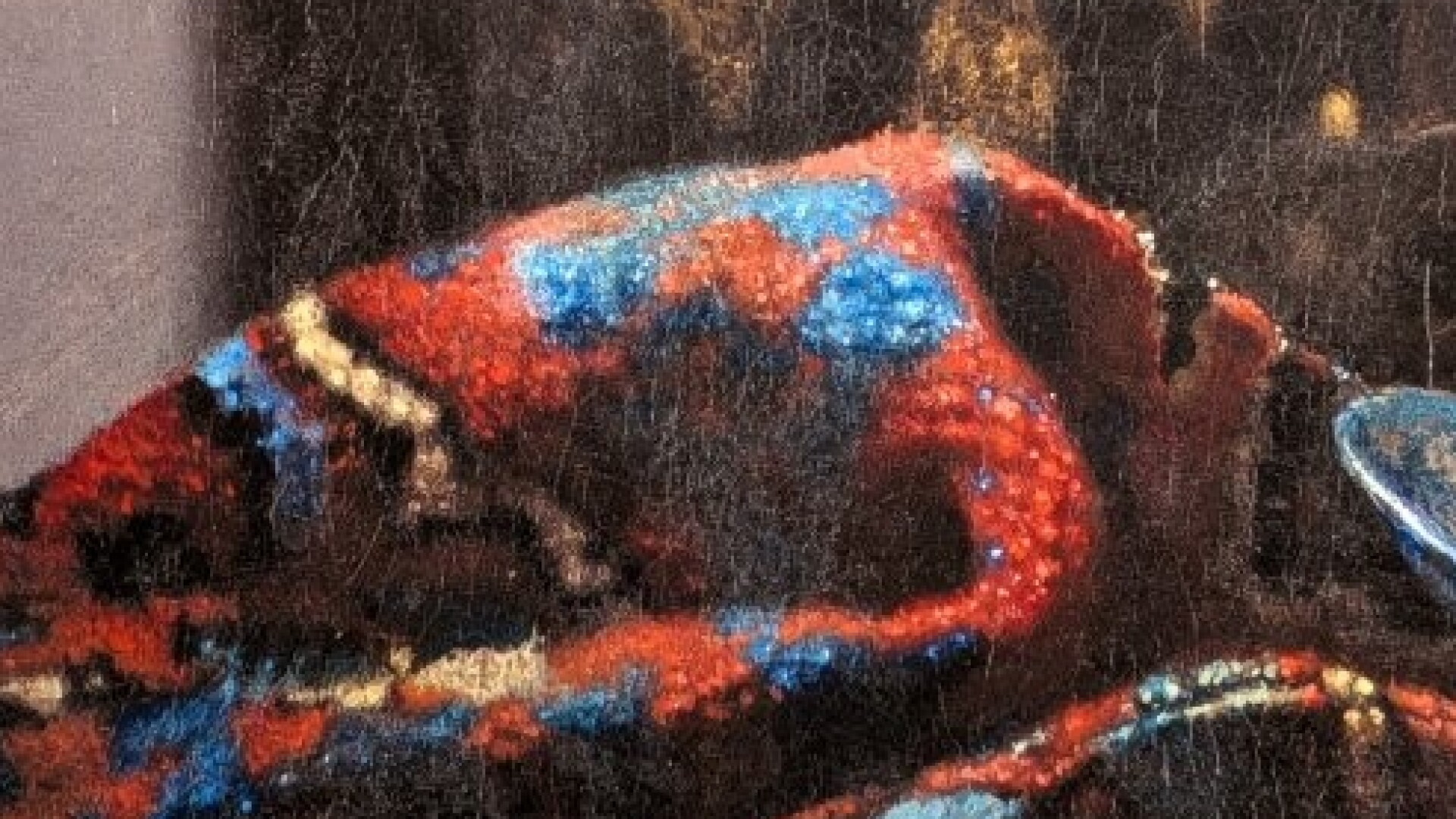
- Textiles and carpets: instead of a traditional tablecloth, we often see heavy, colourful oriental carpets. In the 17th century, these were not laid on the floor but served as prestigious table coverings. They absorb sound and enhance the atmosphere of intimacy and wealth.
- The yellow satin jacket: this iconic garment with ermine trim appears in no fewer than six paintings (including The Writing Woman and Lady with a Maid). It was an ‘overhuys’ or dressing gown, a status symbol indicative of the informal yet luxurious private sphere of the elite.
- Ceramics and glassware: the white-glazed jug in The Milkmaid or the refined wine glasses in A Glass of Wine are no coincidence. In her research, Van Dongen points out that the type of pottery can often be precisely dated, which helps us better understand the chronology of Vermeer’s development.
Attributes as moral signposts
In addition to their material value, the attributes serve a narrative function. Take the musical instruments (the virginal, lutes and violas da gamba). In the seventeenth century, music symbolised the harmony between two souls, but could also serve as a warning about the fleeting nature of pleasure (Vanitas).
The maps on the wall are also crucial. They point to the intellectual curiosity of the inhabitants and the Republic’s drive for expansion. A map behind a pensive woman suggests a link to an absent lover who is overseas, suddenly filling the empty space in the painting with longing and distant travels.
Conclusion: the dialogue between light and matter
Vermeer’s genius lies in the balance. He lets the light fall on a pewter dish as if it were pure silver, and gives a simple bread basket the dignity of an altarpiece. Thanks to the work of researchers such as Alexandra van Dongen, we view these attributes with fresh eyes. We no longer see merely an aesthetic image, but a physical world in which every object tells a story of trade, status, love and the transience of time. Objects that Johannes Vermeer painted with just as much love and attention as the figures in his works.
Anyone wishing to fully understand Vermeer’s paintings must therefore look not only at what the characters are doing, but above all at the objects that surround them. They are the silent witnesses of a world which, though frozen in paint, still feels tangible.
Discover the details in the works of Johannes Vermeer during a visit to the Vermeer Centre Delft. Click here to book your ticket online.
More information about Alexandra van Dongen and her book “The Tangible World of Johannes Vermeer. Household Objects as Painting Models” can be found here.